
Dr. Mattie Christine Pawlowic is a Principal Investigator and Sir Henry Dale Fellow. Her group is a member of the Wellcome Centre for Anti-Infectives Research at the University of Dundee. She established her independent research group in 2017 funded primarily by a Sir Henry Dale Fellowship from the Wellcome Trust and The Royal Society (£1.5 million; 2019-2025).
Thanks to a Career Development Award (CDA) from the Wellcome Trust, Mattie’s lab has been awarded £3.08 million to fund the lab for the next 8 years! This funding will commence in May, 2025. These awards are incredibly competitive, with only one other group from the University of Dundee successfully being awarded this type of research grant since CDAs were established.
You can read about the project on the Wellcome Trust’s website HERE, the University of Dundee press release HERE and the story on the WCAIR website HERE. You can read about our work more generally in the UoD Alumni magazine, “The Bridge” HERE. You can watch Mattie give a recent seminar where she describes how previous research in the lab has lead to this new project below:
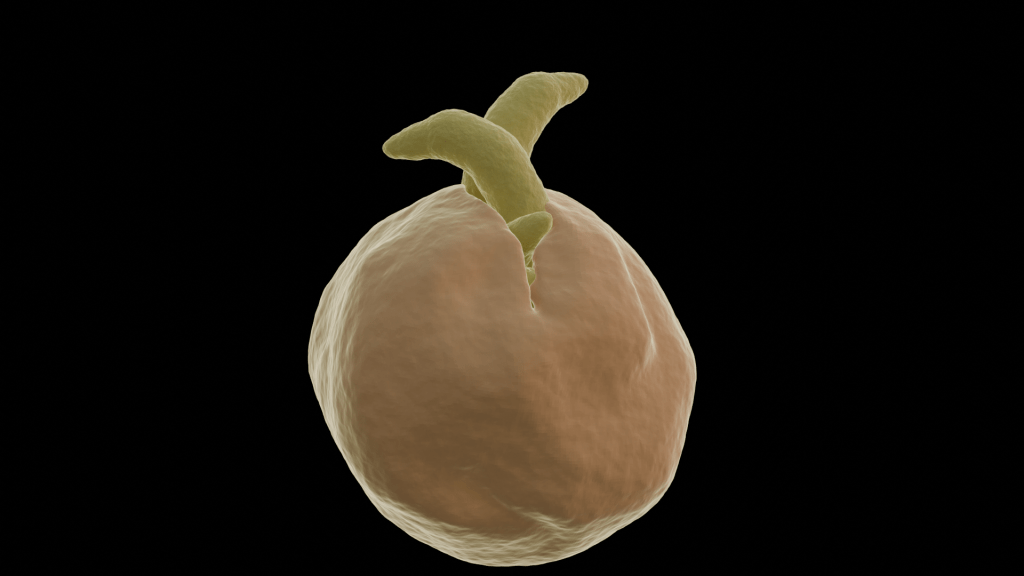
Dr. Pawlowic’s lab studies Cryptosporidium, a parasite that infects the guts and causes severe diarrheal disease. The symptoms are severe and lead to impressive weight loss (often >15 pounds in < 2 weeks) and dangerous dehydration. Infection with this parasite is especially deadly for young, malnourished children. It is estimated that up to 200,000 children under the age of 2 around the world die annually from this disease.
Cryptosporidiosis can likewise be fatal for people who are immunocompromised (under immune suppression therapy for cancer treatment or an organ transplant, or a disease that affects the immune system like AIDS). People with intact immune systems also get sick, and it can require hospitalisation, but eventually their immune system can control the infection. There is currently no vaccine and no effective treatment for cryptosporidiosis.
Cryptosporidium is a waterborne pathogen that is transmitted inside a microscopic shell-like structure called an oocyst. The parasite is most often spread through contaminated water. This includes outbreaks in municipal water supplies and swimming pools. This is because Cryptosporidium is amazingly resistant to common water treatments, notably chlorination. Once ingested, parasites “hatch” from the oocyst and infect the intestine, causing diarrhoeal disease.
Hatching out of their eggshell is a critical bottleneck in parasite transmission. New tools the Pawlowic created allow us to investigate the biology of hatching and open this area for exploration. We recently identified proteins that are located at the zipper-like opening on the oocyst shell (Bacchetti et al biorxiv, see publication page). We will use genetics, biochemistry, and microscopy to understand how Cryptosporidium build the protective shell and zipper opening, and hatch at the perfect time. Using microscopic biomechanical techniques, with collaborators Aurelien Dumetre and colleagues in France (Lab Adhesion and Inflammation) will understand why oocysts are so resilient. These insights have the potential to help us understand how to interrupt infection and stop parasite transmission.
You see a short video of Mattie explaining some of our research questions below. Thanks to Nicola Caldwell, lead :
From the Wellcome Trust website:
During Career Development Award, the awardee will develop their research capabilities, drive innovative programmes of work and deliver significant shifts in understanding related to human life, health and wellbeing.
To be competitive, your research proposal will be:
- Bold. It aims to deliver a significant shift in understanding and/or it provides a significant advance over existing methodologies, conceptual frameworks, tools or techniques. It has the potential to stimulate new and innovative research.
- Creative. Your proposed approach is novel – it develops and tests new concepts, methods or technologies, or combines existing ideas and approaches in a new way.
- High quality. It is well-designed, clear, supported by evidence and the proposed outcomes/outputs are feasible.
Although Mattie wrote the application and interviewed in front of an interview panel at the Wellcome Trust, current and previous lab members made pivotal contributions to the application and my preparation. Thank you all for your support over the last 8 months during the process.
Mattie would also like to thank her mom and her son Clark.
 Mattie Christine Pawlowic Lab