When new EastBio PhD student Peyton joined the lab, it opened up the opportunity to begin a substantial collaboration with our colleagues at Moredun Research Institute.
You can see their excellent content about cryptosporidiosis HERE. Thanks to Drs Frank Katzer and David Smith (who are co-supervisors for Peyton’s PhD project), and invaluable help from Paul Bartley and the rest of the team at MRI.
With their help, we established production of transgenic C. parvum in large numbers for use in our drug discovery work. Now we are are using the calf model to learn more about bovine cryptosporidiosis itself. This is an area of Cryptosporidium research that has mostly been ignored, due to challenges in having the expertise, facilities, and large amounts of funding required. Bovine cryptosporidiosis is the leading cause of scouring in neonatal calves, and has a huge economic impact for farmers. In addition, cattle shed billions of parasites into the environment. This infection is zoonotic and can infect people as well. Lambs are also a source of infection with Cryptosporidium, and there has been a sizeable outbreak this week in Wales.
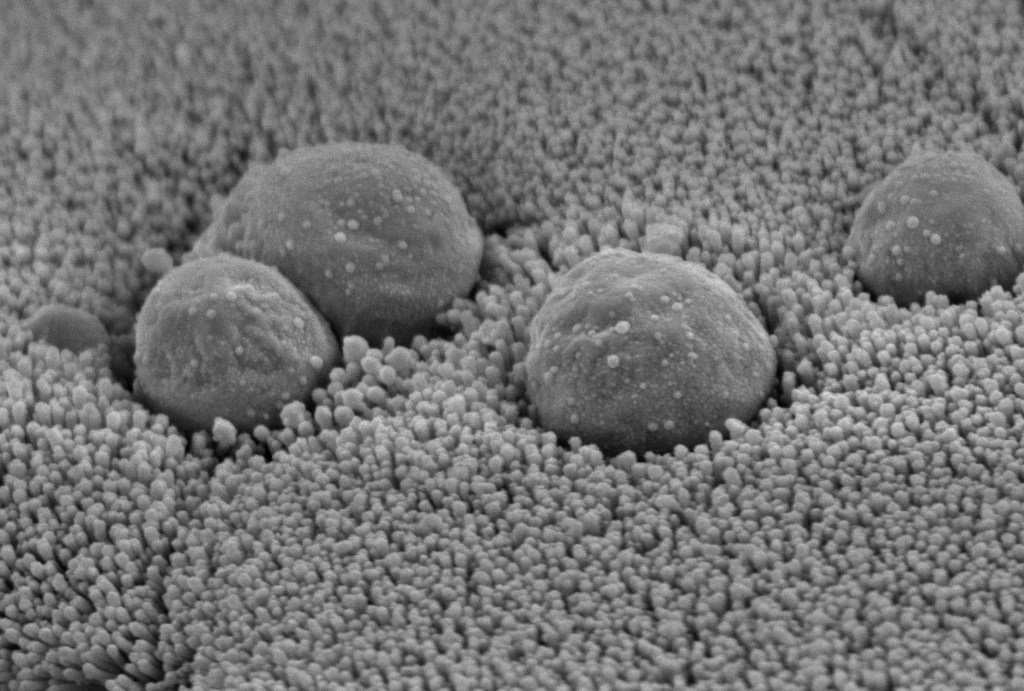
Today we share our first pre-print manuscript from the growing collaboration, describing and comparing the location of Cryptosporidium parvum in the most commonly used animal models for studying cryptosporidiosis. Importantly, we discover that parasites are not restricted to a small part of the calf gastrointestinal tract… but rather infect the entire thing! Also we observe differences between the acute and chronic mouse models. These insights are critical for interpreting data from previous publications, as well as designing future studies.
We are also grateful to have recently been awarded funding from the Hannah Dairy Research Foundation to follow-up on our observations from this pre-print. You can see other grants from the Hannah Dairy Research Foundation posted HERE. Peyton did an outstanding job writing the grant titled ‘Developing an in vitro culture system to model calf cryptosporidiosis using bovine intestinal organoids’. You can read more about this project in the April 2025 SPPIRIT newsletter.
 Mattie Christine Pawlowic Lab